Posts

Showing posts with the label Marketing

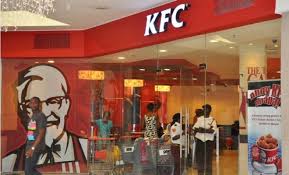
Why KFC won’t chicken out as a Chicken QSR
Image
KFC, yes, the one you know, has closed down hundreds of its outlets in the UK. And it is for no other reason than – don’t wait for it – chicken! Rather, and more accurately, the outlets are being shut down for the shortage of chicken, an integral item of the chicken-based offerings. This is unlike the reasons for having lately closed down some outlets in Nigeria. The UK problem only arose because KFC switched its Delivery Contract over to DHL, who’s had some teething problems delivering fresh chicken to all of the 900 KFC outlets; with some of the remainder outlets now having to close down, operate reduced hours or limited menu, more because KFC says “it would not compromise on quality”. On the lighter side, should we then resort to a name change to save the business? How about Kentucky Fried All? Or Kentucky Possibly Chicken? Or even Kentucky May-Not-Have Chicken? Or do we just say Kentucky Fried Choice, if only to keep the renowned KFC acronym. More seriously,...

Is it feasible to segment a market when starting a new business?

Image
The IBB approach to marketing success for entrepreneurs- Well, it happened again. I was approached recently by an entrepreneur who had tried to segment the market top-down to prepare a Marketing Plan and found it delivered groups of customers who were defined too generally and were too numerous. The numbers were way beyond his resources to reach, and supply and the requirements were so general so as to make the product-service fit to the customer impossible to implement. The drilling down process was killing him and he was suffering a classic case of paralysis by analysis. I suggested to him that a better approach was the entrepreneurial approach because this is what many entrepreneurs do naturally; identify, build, and broaden (IBB). It is a bottom-up process unlike segmentation which is top-down. The approach involves identifying the perfect customer, easy to change, accessible, and fundable with an economic number of similar cohorts. (For many entrepreneurs, this is...

Poor document management could be your biggest time killer at work

Image
In his famous book The 4 Minute Work Week , author Tim Ferris introduces readers to Pareto’s law, also known as the 80/20 rule. The idea is that you can vastly improve your quality of life by focusing your energy on the 20% of activities that produce 80% of your desired outcomes. Conversely, says Ferris, you need to identify and eliminate the 20% of activities that take up 80% of your time. The goal is always to find and eliminate inefficiencies in order to give yourself more time to spend on high value activities. Let’s apply this to the office for a second. How often do you leave at the end of the day with an underwhelming sense of achievement because it took too long to find what you were looking for? The frustration of having wasted time trying to find information is one I’m sure you can relate to. If not, just ask someone in the Sales or Marketing team. I’m guessing you’ll find that people in Marketing spend a fair amount of time and energy creating brochures, data sh...

Is it time for Marketing and HR to merge in order to build the brand?

Image
In a recent article, Sarwant Singh forecasts a year of "smarter" everything; AI, IoT, money, media, automobiles, phones and even robots. This is to be expected; after all, isn't this what the last decade was leading up to? Smarter is better. There is no dispute about that. Smartcar These days, the definition of smart continues to evolve. This is exciting for consumers. As employees or employers however, these changes are invigorating. We can live and work smarter, faster, more intelligently, and more easily. Smartphones Has this unending emergence of consumer-based-intelligence and information-based-automation, caused us to overlook one critical evolution that has been quietly brewing in the background? The convergence of Marketing and HR has happened!. And here is why it matters, and what we need to know about it. In 2017 we acknowledge that the battle for brand and share-of-wallet has moved No longer does it sit inside brick and mortar store...

Finding your dream job: how helping others can help you find career fulfilment

Image
We all want to find a dream job that’s enjoyable and meaningful, but what does that actually mean? Some people imagine that the answer involves discovering their passion through a flash of insight, while others think that the key elements of their dream job are that it be easy and highly paid. After a review of two decades of research into the causes of a satisfying life and career, and drawing on over 60 studies, not much evidence has been found for these views. Instead, six key ingredients of a dream job were discovered; and they don’t include income, neither are they as simple as “following your passion”. In fact, following your passion can lead you astray. Steve Jobs was passionate about Zen Buddhism before entering technology. Condoleezza Rice was a talented classical musician before she started studying politics. Rather, you can develop passion while doing work that you will find enjoyable and meaningful. The key is to get good at something that helps other peo...

"I see dead marketers"

Image
Adherents to marketing are gradually fading in their approach, but not marketing itself. I see dead marketers, walking around like regular people, so says  Steven P Dennis . They only see what they want to see. They don’t know they’re 'dead'. I see m arketers who behave as if customers care about channels; marketers who continue to push average products for average people; marketers who value efficiency over effectiveness; and marketers who think they can price cut their way to prosperity. I see marketers who don’t get that today’s battle is for share of attention: marketers who believe that the same irrelevant and unremarkable promotions will work if they just shout them louder and more often. I see marketers who relentlessly flog one-size-fits-all programmes instead of embracing a treat different customers differently strategy.  Of course, I see marketers who believe they are ultimately in control. Mass marketing is dying, as are its stubborn adherents. It’s th...

Sampling: giving your customers a taste of your product

Image
Sampling is a marketing tool which is based on freebies (samples) of your product given at no cost to potential consumers. This tool accomplishes a number of functions: attracts new buyers, works on the audience loyalty, ensures feedback from customers etc. It is one tool you should learn how to use. As a rule, when people talk about Sampling in marketing, they mean a giveaway of free samples in streets, at shopping malls, supermarkets, educational institutions, business centres, railroad stations, airports and any other places where you can meet the target audience for the product. For sure, we are talking about B2B sampling and this method of marketing has been well-proven since olden times. The sampling as a marketing method is based on consumer psychology: if potential customers have already tasted a product, first: they have already felt useful qualities of the product, realized its advantages and possible benefits for themselves; secondly: it would be mentally harder t...

Don’t turn that idea into a new business until you’ve seen this checklist

Image
We’re living in an era of start-ups. Every other person is looking to start a new business and become an entrepreneur. But more than 80% businesses fail to survive their first 18 months. Nobody knows if your business will work or not; there is no formula or method which can help you find out that your idea has the potential to be a great business or not. However, there are certain factors that you need to check on, before you invest your time, money and energy into your idea. Here are some observations and necessary things you should keep in mind before starting a new venture. 1. Timing Out of many factors, including idea, funding and team, timing is the most important factor that you need to check. Great ideas have failed only because they started before time or they were too late. It’s the timing that decides your company's future. YouTube , for instance, was not the first video sharing platform. There were a few before that, but due to bad broadband penetration i...

Millennials and the changing employer-employee relationship

Image
Do you also subscribe to the notion that people under the age of 34 are immature, coddled, and self-obsessed? No, I don’t buy it. It is very okay to have a team of smart, socially-conscious, hard-working, and collaborative young people. Just don’t hire other types of people, regardless of age. Even though data show that Millennials are more likely to switch jobs than their Generation X colleagues, and that they’ll weigh flexible work schedules and work-life balance as heavily as they do salary, it still doesn’t strike as entitlement, though. Unprofessional deeds and immaturity strike more as the reasonable response to the world we live in. After Youth Service in 1991, I read job ads in newspapers, and circled interesting ones using a physical pen that actual ink came out of. I made phone calls on a phone that was connected to a wall. I had to stand next to the phone during these phone calls, due to cord length limitations. Sometimes people returned my calls and...